Scope: Always-on, boosted content & store-opening awareness
Run always-on monthly activity alongside boosted content published through the back end and awareness campaigns timed to store openings, each objective pointing at its own destination.
Outcome
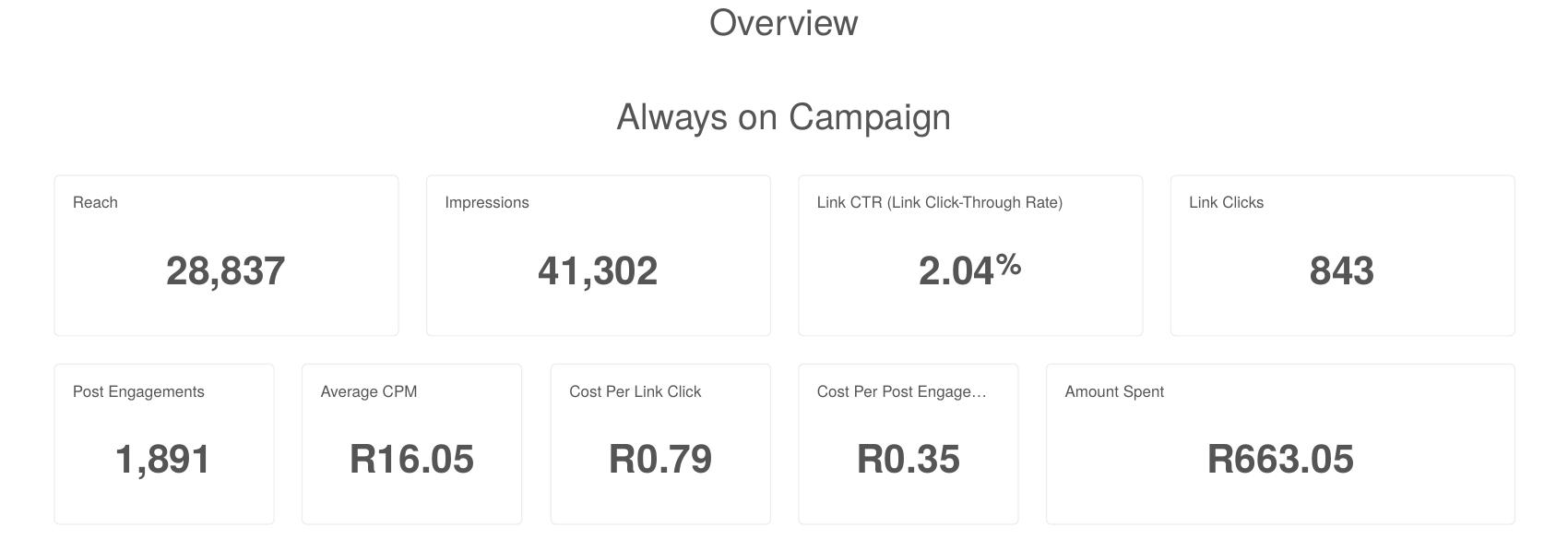
Delivered. Always-on campaigns ran on a monthly cycle across both markets, boosted content was pushed through the back end, and store-opening awareness bursts ran in-market. Attribution was handled with UTM parameters and platform-level trigger events on every link, since no post-conversion “thank you” page was live during the period.
Recommendation: Paid media (Meta & TikTok)
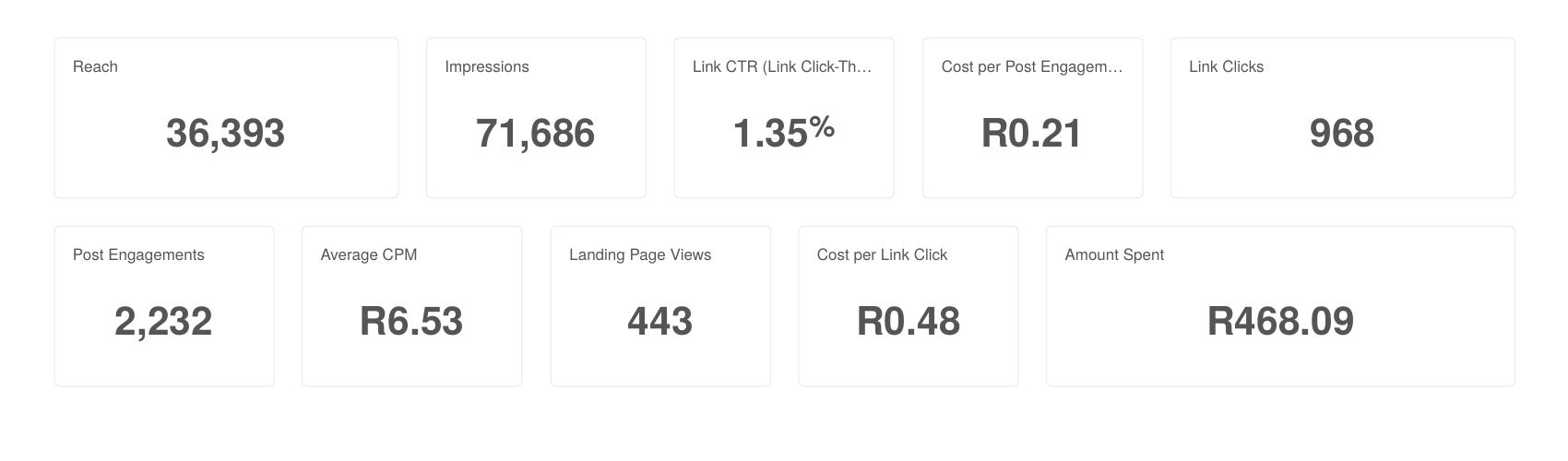
Keep prioritising mobile-optimised creative, hold cost per landing page click low, refine targeting toward South African audiences aged 25–44, and monitor CPM, cost per click and cost per engagement across both platforms.
Outcome
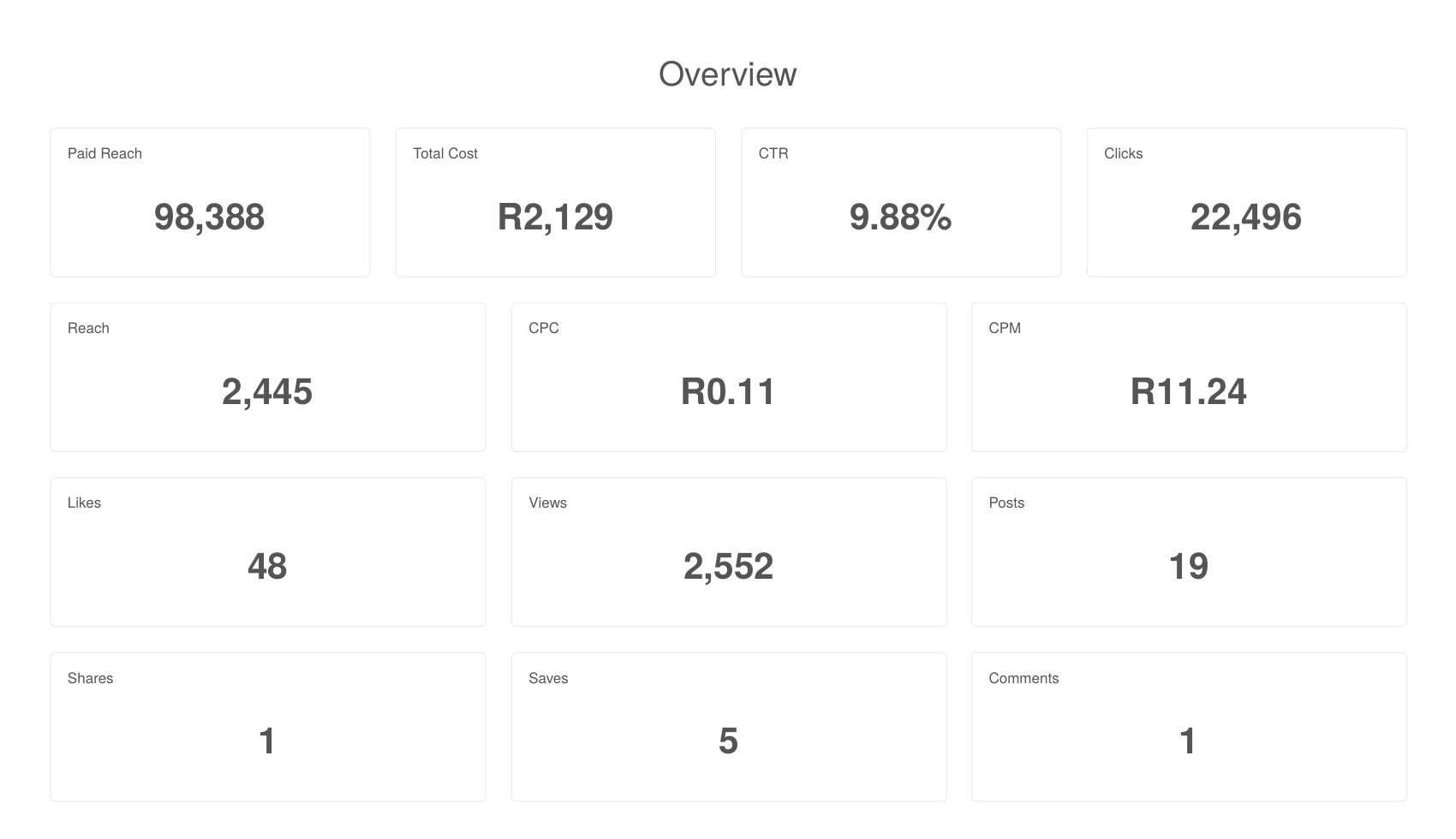
Mobile drove almost all impressions, engagements and landing page clicks on both platforms, with Facebook leading engagement volume over Instagram. On TikTok, carousel and image formats outperformed (Rewards carousel: 100K+ impressions; image content: 70K+), so multi-angle creative is the next lever.
Recommendation: Organic (Facebook & Instagram)
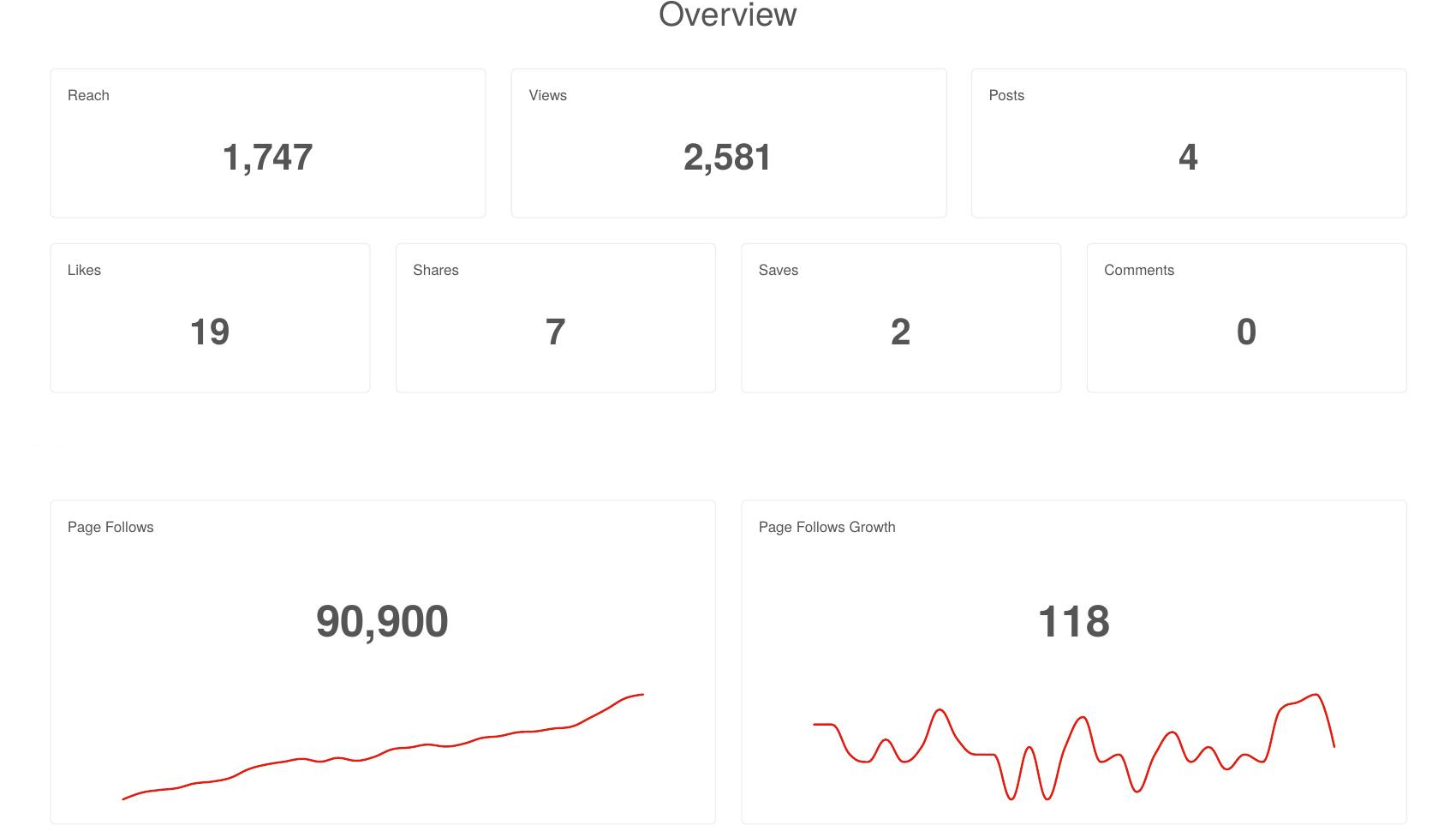
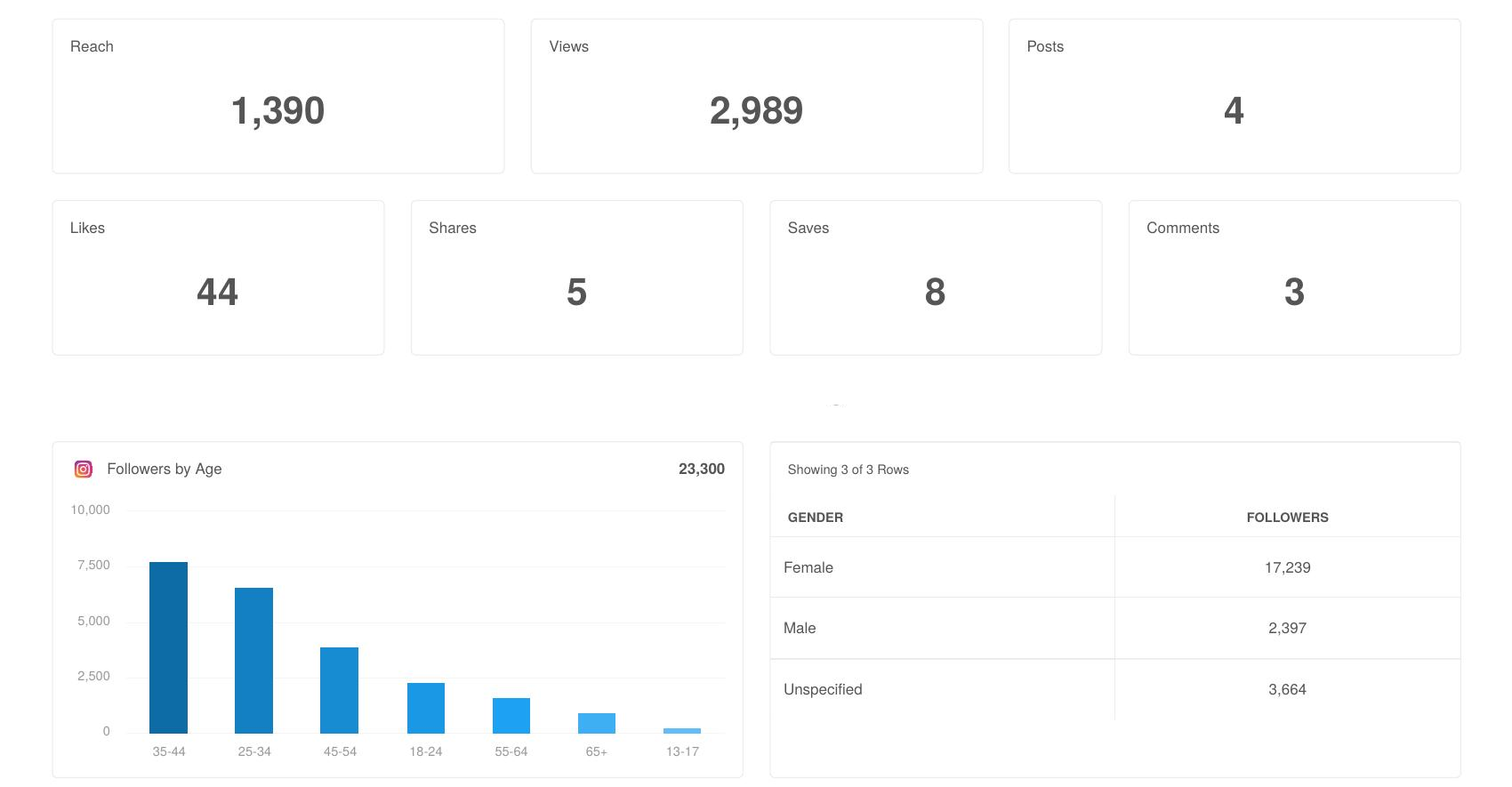
Move both pages beyond pure product promotion toward tool and material education, step-by-step guides and creative storytelling that shows products inside projects rather than as a catalogue.
Outcome
Engagement prompts (e.g. “Which art piece are you working on?”) are being introduced to lift saves, comments and repeat viewership; Instagram has the most room to grow with a more inspiration-led approach, while the carousel format continues to perform on Facebook.
Constraint: Creative optimisation
As indicated in the campaign spreadsheet, the client specifically requested that existing creative assets not be altered or substantially modified. The team had to work within the assets already provided rather than changing visuals, messaging or formats.
How it was handled
Optimisation therefore could not rely on creative testing or redevelopment. Performance gains were pursued through targeting, campaign structure, audience allocation, budget distribution, placements and ongoing performance monitoring: keeping the campaigns fully aligned with the approved brand assets.
Constraint: Always-on budget vs. objectives
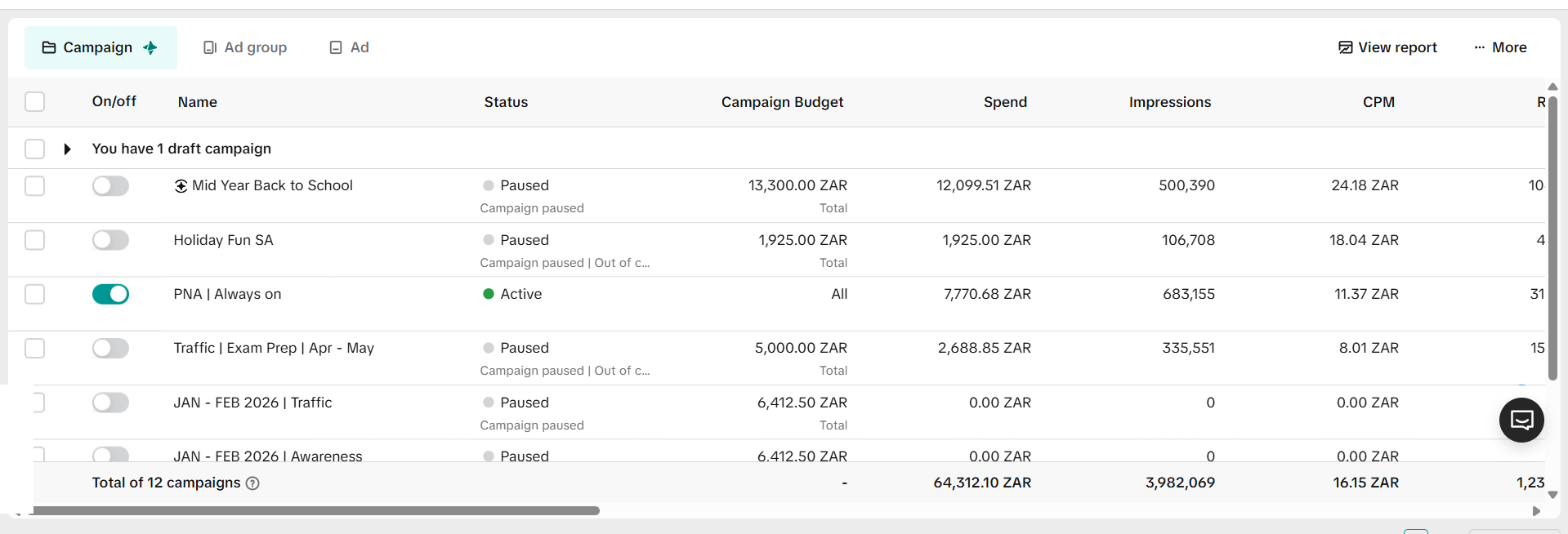
The available budget for the always-on campaigns was limited relative to the number of objectives and destinations they were expected to support. The campaigns produced positive results, but the budget was not sufficient to maximise performance across every objective simultaneously.
Context
Results should be read in the context of the available media investment. Performance was strong given the budget and operational constraints; stronger, more comprehensive results were achievable with a larger budget and a structure that allowed sufficient investment behind each individual objective.
Structure: Always-on campaign setup
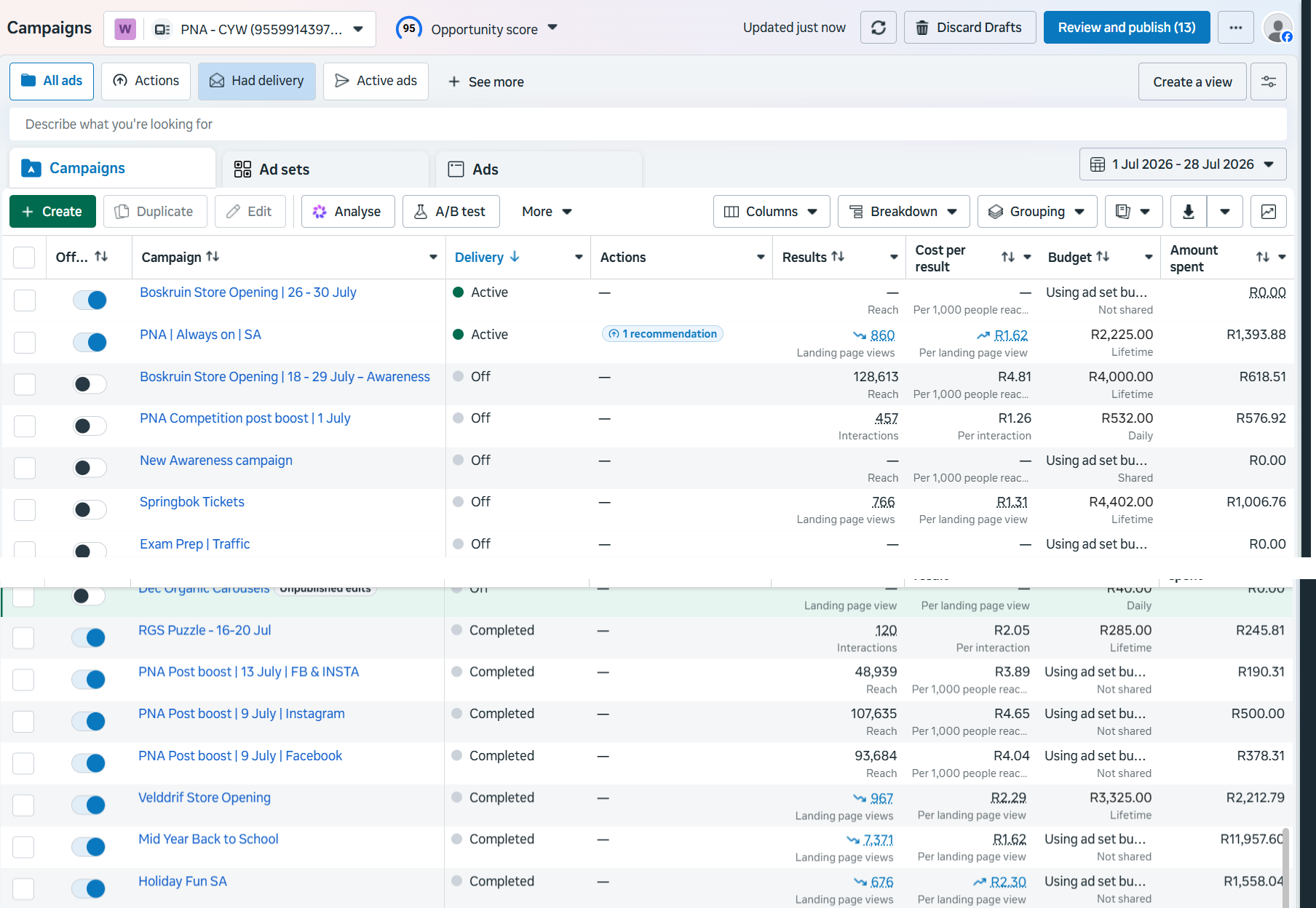
The always-on activity consisted of three distinct objectives, each directing users to a different destination or conversion path. These were consolidated into a single campaign structure so Meta's delivery system could allocate budget based on predicted performance: the approach recommended by the team leader, since Meta prioritises the ad set it identifies as having the strongest opportunity to generate results.
Implication
Effective for overall performance, but limiting for measurement: one objective can dominate the budget, leaving the others without enough delivery or spend to establish their true potential.
Recommended alternative structure
From an optimisation and measurement perspective, the preferred approach would have been to split the three objectives into three ad groups, each with a designated share of the budget: or three separate campaigns, each with its own budget for even greater control.
Why it matters
Each objective would have received a smaller but guaranteed allocation, creating a more controlled testing environment and a far more accurate read on each objective's real performance instead of letting Meta's automated delivery decide the split.
Strategic consideration & disclaimer
The proposed separation of the three objectives was considered to improve budget control, measurement accuracy and optimisation visibility, but it was not adopted: the campaign proceeded on the approved structure.
Disclaimer
The final results should not be read as a like-for-like comparison of the three objectives on an equal-budget basis; differences in spend and delivery were influenced by Meta's automated budget allocation. Within the approved structure, budget and creative limits, the campaigns still generated positive results and showed clear upside with greater budget flexibility, dedicated allocation per objective and freedom to test creative.